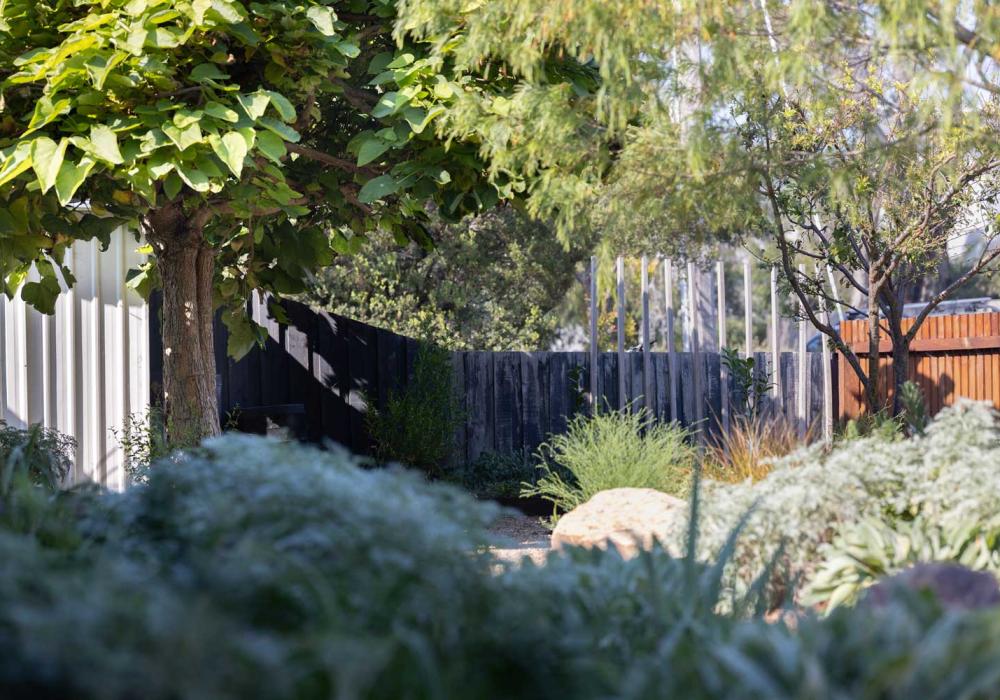
Good landscape design on the Bellarine Peninsula needs to respond to the conditions of the individual property, particularly when that property is close to the coast. Wind, salt exposure, soil conditions, drainage and material selection can all influence how an outdoor space should be planned.
For homeowners, the goal is not simply to create a garden that looks coastal. It is to create an outdoor space that works in its coastal environment. That means considering where people will spend time, which areas need shelter, how plants will cope with exposure and whether the materials selected are appropriate for the conditions.
Start your Bellarine Peninsula landscape design with the site
One of the most important parts of coastal landscape design happens before plants or paving are selected.
Start by looking at how the property actually behaves.
Where do the strongest winds come from? Which areas are protected by the house, fencing or existing vegetation? Where does water collect after heavy rain? Which parts receive full sun? What is happening beneath the surface of the soil?
These conditions can vary considerably, even between properties in the same area.
Soil is a good example. It is easy to assume that a property near the coast will simply have sandy, free-draining soil. Victorian Government soil mapping shows that parts of the Bellarine Peninsula include deep sands as well as areas where sand occurs over heavier clay.
That can have practical implications for drainage, planting and landscape construction. Rather than designing around assumptions about coastal conditions, a better approach is to understand the individual site first.
How do you create shelter from coastal winds?
Wind can have a major influence on how comfortable an outdoor space feels.
This is particularly important when deciding where to position decks, pergolas, pools, dining spaces and other outdoor living areas. The most visually appealing position is not necessarily the most comfortable one if it is exposed to prevailing winds.
Shelter can be created in several ways.
The home itself, fencing, garden structures and planting can all help establish more protected areas. Layered planting can be particularly useful, with tougher plants positioned in exposed areas and more sensitive planting located further into the garden.
Rather than treating wind as a problem to address after the landscape has been designed, consider it when establishing the layout.
A protected outdoor area that takes advantage of afternoon sun, for example, may get considerably more use than an entertaining space positioned without considering exposure.
What plants work well in coastal gardens?
There is no single list of plants that will work for every coastal property.
A plant growing in a protected courtyard may experience very different conditions from the same plant positioned along an exposed boundary. Salt-laden winds, sunlight, soil, available moisture and shelter can all influence what will establish successfully.
Local vegetation provides useful clues. Coastal environments around Greater Geelong and the Bellarine support species including Coast Wattle, Coast Tea-tree, Coast Daisy-bush, Boobialla, Moonah and Drooping Sheoke.
However, choosing plants simply because they occur locally is not enough.
Good garden design considers the microclimates within the property. Tougher plants can be used in exposed positions, while the shelter they create can allow a broader planting palette further into the garden.
Height and density matter too. Trees and larger shrubs can provide structure, medium-height planting can help establish layers and lower planting or groundcovers can soften paths, paving and garden edges.
The result can feel much more established and connected than a garden designed around isolated feature plants.
What should you know about coastal soils and drainage?
Understanding the soil beneath a landscape can prevent problems later.
Sandy soils can drain quickly, which may affect how water and nutrients are retained. Other Bellarine Peninsula soil profiles can include sand over clay, creating different drainage characteristics below the surface.
This is one reason drainage should be considered across the entire landscape.
Adding paving, retaining walls, concrete, garden beds or other constructed elements can change the way water moves around a property. Changes in ground levels can do the same.
If irrigation is required, it is also worth considering it during the landscape design rather than after the garden has been constructed. Irrigation can then be planned around lawns and planting zones before finished areas make installation more difficult.
Choose materials for more than their appearance
Materials play an important role in establishing the character of a coastal landscape, but appearance should not be the only consideration.
Paving, hardwood decking, fencing, gates, pergolas and retaining walls all need to suit their location and intended use. Close to the coast, the durability of associated components and fixings also deserves attention.
Victoria’s building regulator specifically identifies seaside conditions as an environment where unprotected steel structures and fixings can be affected by corrosion. Material specifications, finishes, fixings and ongoing maintenance should therefore be considered alongside colour, texture and style.
This does not mean coastal homes need to use one particular material palette.
Natural stone, timber, concrete and other materials can all contribute to a coastal landscape. The important part is selecting materials appropriate for the project and considering how they will work together.
A restrained selection of materials can also help create visual consistency. Repeating a paving material, timber or other finish across different areas can connect the front garden, pathways, entertaining areas and backyard without making every space identical.
Think about how you will actually use the garden
A successful coastal landscape is not just a response to environmental conditions. It also needs to work for the people living there.
Before finalising a design, think about what you want to do outside.
Do you regularly entertain? Do you need space for children? Is the garden primarily somewhere to relax? Do you want a pool? Is privacy important? Do you need an outdoor shower after returning from the beach? Would a fire pit area or vegetable garden actually get used?
These answers help establish priorities.
They can also prevent a landscape from becoming a collection of attractive features without a clear relationship to one another.
The best position for a deck, for example, should consider its connection to the house, garden, sun and wind. A pool should be considered alongside its surrounds, fencing, pathways and planting. A front garden needs to account for pedestrian access, vehicles, boundaries and the entrance to the home.
Looking at these relationships during landscape design can make the finished property feel much more cohesive.
Bring your coastal landscape together with CMS Landscaping
Good coastal landscape design considers the property as a whole. Wind, soil, drainage, planting, materials, levels and outdoor living areas all influence one another, which is why planning them together can be valuable.
CMS Landscaping can take a Bellarine Peninsula project beyond the initial landscape design and into construction.
Our landscape construction services include pool landscaping, retaining walls, paving and stonework, hardwood decking, pergolas, fencing and gates, gardens and planting, irrigation and concreting. Where groundwork is required, CMS Landscaping also provides excavation, earthworks, site preparation, landscape drainage and other excavation services.
Having these complementary capabilities within one landscaping company allows the different stages of a project to be considered together. Contact us to discuss your landscape design needs.